
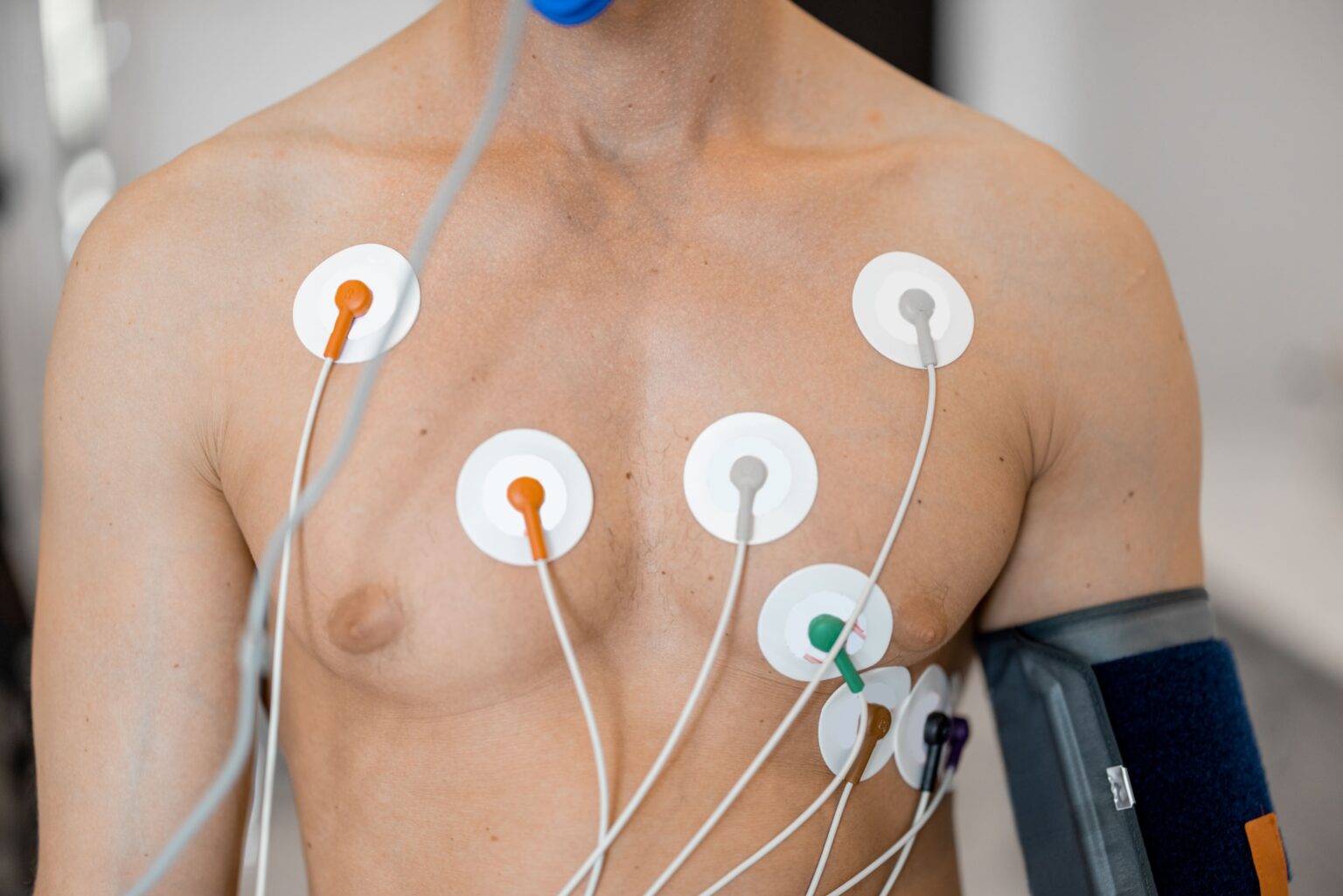


Electrocardiogram (ECG) Singapore

An electrocardiogram (ECG) is a simple, non-invasive test that records your heart’s electrical activity. Small sensors are placed on your chest, arms, and legs to capture your heart’s rhythm and electrical signals. This test helps cardiologists assess how well your heart is functioning and detect any irregularities in rhythm or structure.

doctor img
Dr. Kua Jieli

MBBS (SG)|MRCP (UK)|MMed (Internal Med) (SG)|FAMS (Cardiology, SG)

Image Electrocardiogram (ECG)
Image ECG indications

Indications for Electrocardiogram

Your heart specialist may recommend an ECG for several different reasons related to your heart health and symptoms.

  • Chest pain or discomfort: An ECG can help determine if chest pain is related to your heart or caused by other conditions. The test shows whether your heart muscle is receiving an adequate blood supply during episodes of discomfort.
  • Heart palpitations or irregular heartbeat: If you experience a racing, fluttering, or irregular heartbeat, an ECG can identify abnormal heart rhythms. The test captures your heart’s electrical patterns to diagnose irregular heart rhythm (arrhythmias) or other rhythm disorders.
  • Shortness of breath or unexplained fatigue: These symptoms may indicate heart problems that an ECG can help identify. The test can reveal if your heart is working harder than normal or if there are underlying issues affecting its function.
  • High blood pressure monitoring: An ECG helps assess whether high blood pressure has affected your heart muscle over time. The test can show signs of heart enlargement or strain that may develop with prolonged hypertension.
  • Pre-operative assessment: Before certain surgeries, an ECG ensures your heart can handle the stress of the procedure. This baseline measurement helps your medical team monitor your heart during and after surgery.
  • Medication monitoring: Some medications can affect your heart rhythm, requiring regular ECG monitoring. The test helps ensure that treatments for other conditions are not causing harmful effects on your heart.
  • Family history of heart disease: If heart conditions run in your family, an ECG can detect early signs of inherited heart problems. Regular monitoring may help identify issues before symptoms develop.

Benefits of Electrocardiogram

An electrocardiogram offers several advantages for understanding and monitoring your heart health.

  • Quick and painless diagnosis

    The test takes only a few minutes to complete and causes no discomfort. You can receive immediate results that help your doctor make informed decisions about your care.

  • Early detection of heart problems

    An ECG can identify heart conditions before you experience noticeable symptoms. Early detection allows for timely treatment that may prevent more serious complications from developing.

  • Monitoring treatment responses

    The test helps your doctor track how well heart medications or treatments are working. Regular ECGs can show improvements in your heart’s function or identify when treatment adjustments are needed.

  • Non-invasive and widely available

    Unlike some cardiac tests, an ECG requires no injections, radiation, or special preparations. The procedure can be performed quickly in most medical settings without any recovery time needed.

  • Detailed heart rhythm analysis

    An ECG provides information about your heart’s electrical system and rhythm patterns. This helps doctors distinguish between different types of heart conditions and plan appropriate treatment approaches.

Electrocardiogram Techniques in Singapore

Different ECG techniques may be used depending on your specific situation and what your doctor needs to assess.

Standard 12-lead ECG
This is the most common type, using twelve electrodes placed on your chest, arms, and legs. It provides a comprehensive view of your heart’s electrical activity.
Exercise stress ECG
Your heart rhythm is monitored while you walk on a treadmill or use an exercise bike. This test shows how your heart responds to physical activity and can reveal problems that only appear during exertion.
Holter monitor
You wear a portable ECG device for 24 to 48 hours during your normal daily activities. This extended monitoring captures heart rhythm changes that might occur intermittently throughout the day.

Preparing for Electrocardiogram

Preparation for an ECG is straightforward and requires minimal steps to ensure accurate results.

Medication review: Continue taking your regular medications unless your doctor specifically advises otherwise. Some heart medications may affect ECG results, but stopping them without medical guidance could be harmful.

Activity restrictions: Avoid vigorous exercise or caffeine for several hours before your test if advised by your doctor. These factors can temporarily affect your heart rate and rhythm patterns.

Medical history information: Bring a list of your current medications and any previous heart conditions or treatments. This information helps your doctor interpret your ECG results more accurately.

What to Expect During Electrocardiogram

The ECG procedure follows a systematic approach to ensure accurate recording of your heart’s electrical activity.

Electrode Placement
Small, sticky patches called electrodes are attached to specific locations on your chest, arms, and legs. The technician may need to clean or shave small areas of skin to ensure good contact.
Lead Wire Connection
Wires from the ECG machine are connected to each electrode to transmit your heart’s electrical signals. The machine will begin recording your heart rhythm as soon as all connections are secure.
Recording Phase
You will be asked to lie very still while the machine records your heart’s electrical activity for about 10 seconds. Talking, moving, or coughing during this time can interfere with the accuracy of the recording.
Completion And Electrode Removal
Once the recording is complete, the electrodes are gently removed from your skin. You can dress immediately as there is no recovery time needed after the procedure.

Are your symptoms affecting your quality of life?

Consult our MOH-accredited specialist for a comprehensive diagnosis & personalised treatment plan today.

cta img 2

After Care and Recovery

Immediate Care

Resume normal activities: You can return to your usual daily activities straight after the ECG is completed. There are no restrictions on driving, working, or physical activities following the test.

Recovery Timeline

No recovery period required: An ECG is completely non-invasive, so there is no recovery time needed.

Follow-up Care

Results discussion: Your cardiologist will explain your ECG findings and what they mean for your heart health. If abnormalities are detected, they will discuss next steps, ongoing monitoring, or additional tests that may be needed.

Potential Risks and Complications

An ECG is considered one of the safest medical tests, with virtually no risks or complications. The most common issue is minor skin irritation from the electrode adhesive, which typically resolves within a few hours.

A consultation with a qualified heart specialist in Singapore ensures your ECG is performed appropriately and any concerns about the procedure or your heart health are thoroughly addressed.


Frequently Asked Questions (FAQs)

Will I need to remove my clothing for an Electrocardiogram test in Singapore?

You will need to remove clothing from your upper body and expose your arms and legs for electrode placement. A hospital gown will be provided to ensure your comfort and privacy during the procedure.

Can I bring someone with me to the ECG appointment?

Yes, you can bring a family member or friend to accompany you to your ECG appointment. They can usually stay in the room during the test if you prefer their support.

What happens if my ECG shows an abnormality?

If your ECG reveals any irregularities, your cardiologist will discuss the findings with you and explain what they mean. Depending on the results, you may need additional tests or monitoring to determine the best course of action.

How long will it take to get my ECG results?

ECG results are usually available immediately after the test is completed. Your cardiologist can often provide initial findings during your appointment, with a detailed written report following shortly afterwards.

Can I take my usual medications before an Electrocardiogram test?

In most cases, you should continue taking your regular medications as prescribed. However, your doctor may ask you to adjust certain heart medications before the test, so always follow their specific instructions.

Frame 1894

Dr. Kua Jieli

MBBS (SG)|MRCP (UK)|MMed (Internal Med) (SG)|FAMS (Cardiology, SG)

Dr. Kua is a senior consultant cardiologist specialised in interventional cardiology and is the medical director at Carrington Cardiology.

  • He is experienced in managing complex coronary artery disease and a variety of other cardiovascular diseases and conditions.
  • He also handles difficult coronary interventional procedures such as left main disease, chronic total occlusions, and calcified lesions.
  • He served as a Senior Consultant at National University Hospital Singapore and Ng Teng Fong General Hospital and was also the Director of the Cardiovascular Catheterisation Laboratory.

Prior to this, he served as an International Cardiology Fellow and Honorary Consultant at Hammersmith Hospital Imperial Healthcare Trust, where he gained valuable experience in various prestigious healthcare institutions.

Location Contact Background
Image location

Mount Elizabeth Medical Centre
3 Mount Elizabeth, #12-02 Medical Centre
Singapore 228510

Image time

Mon to Fri: 09:00am – 05:00pm
Sat: 09:00am – 12:30pm
Sun & Public Holidays: Closed

Get In Touch With Us

Leave us a message and we’ll get back to you shortly


    Full Name*

    Email Address*

    Phone Number*

    Your Message*

    For Faster Response, Call us!

    +65 6956 6588


    Image location

    Mount Elizabeth Medical Centre
    3 Mount Elizabeth, #12-02 Medical Centre
    Singapore 228510

    Image time

    Mon to Fri: 09:00am – 05:00pm
    Sat: 09:00am – 12:30pm
    Sun & Public Holidays: Closed