
Unlike a standard ECG that records only a few minutes, Holter monitoring can detect heart rhythm problems that occur sporadically throughout the day or night
Holter Monitoring Singapore
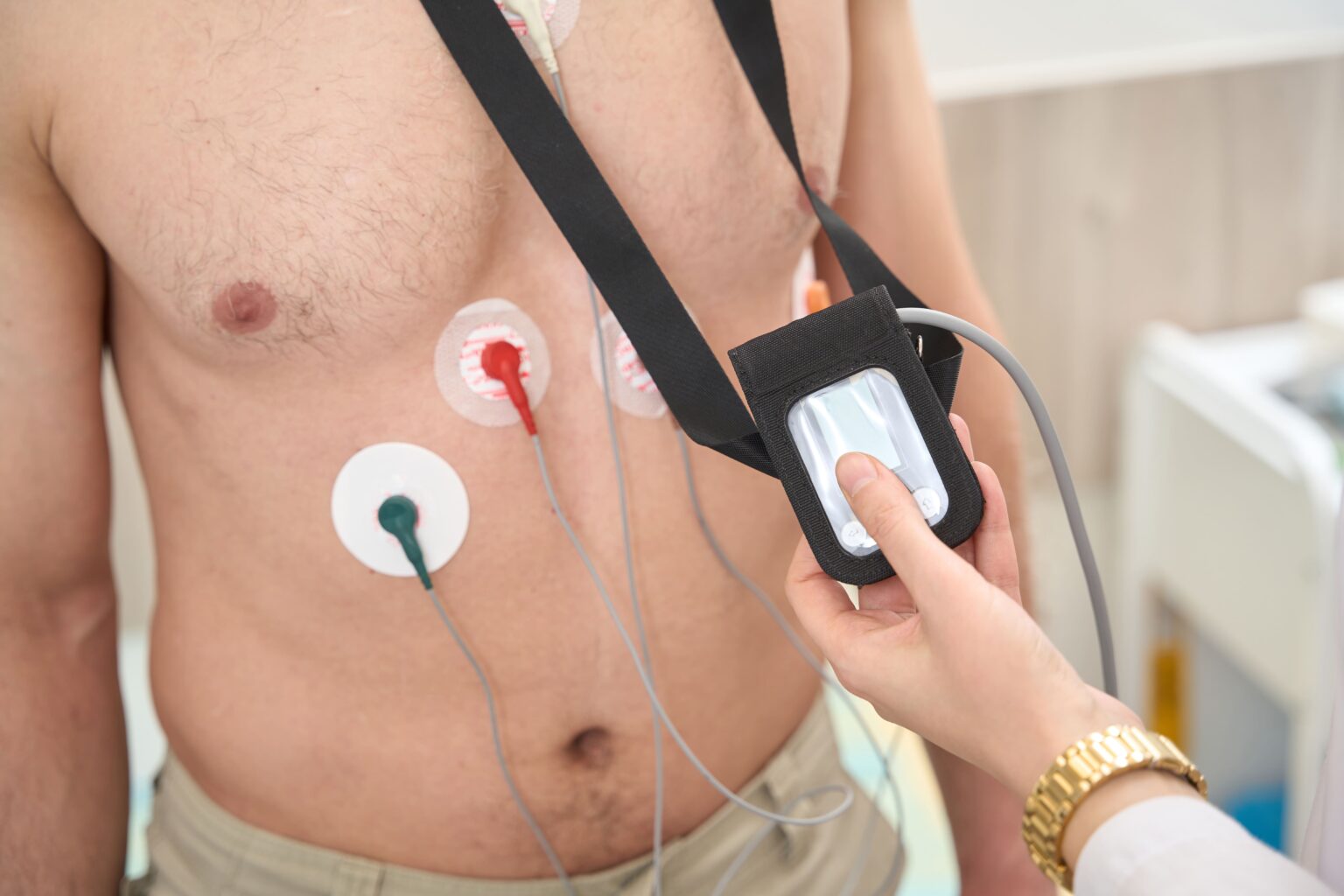
Holter monitoring is a continuous heart rhythm recording test that tracks your heart’s electrical activity over 24 to 48 hours during your normal daily routine. It uses a small, portable device that records every heartbeat throughout the monitoring period. This allows a qualified cardiologist in Singapore to detect irregular heart rhythms or other issues that may not show up during a short consultation or standard ECG.

Dr. Kua Jieli
MBBS (SG)|MRCP (UK)|MMed (Internal Med) (SG)|FAMS (Cardiology, SG)

Indications for Holter Monitoring
A cardiologist may recommend Holter monitoring in Singapore if understanding your heart’s rhythm over time is necessary, especially when symptoms are not captured during a short ECG. It may be advised for:
- Unexplained chest pain or discomfort: Holter monitoring can help determine if chest pain episodes are related to heart rhythm problems or reduced blood flow to the heart muscle.
- Suspected heart rhythm disorders: If you experience palpitations, racing heartbeat, or irregular rhythms that come and go, continuous monitoring can capture these episodes when they occur naturally.
- Dizziness or fainting episodes: The test can identify whether dizzy spells or fainting are caused by heart rhythm abnormalities or changes in heart rate.
- Assessing medication response: Patients taking heart rhythm medications may need monitoring to evaluate how well the treatment is controlling their condition.
- Pacemaker function checks: If you have a pacemaker, Holter monitoring can verify that the device is working properly and pacing your heart as intended.
- Post-procedure monitoring: Following cardiac surgery or other heart treatments, monitoring helps ensure your heart rhythm has returned to normal patterns.
Benefits of Holter Monitoring
Holter monitoring provides detailed information about your heart rhythm over an extended period, helping your cardiologist:
Record intermittent symptoms
Document real-world heart activity
The test records your heart’s behaviour during normal activities like walking, sleeping, and daily tasks, providing a complete picture of how your heart responds to different situations
Guide treatment planning
The detailed information from continuous monitoring allows your cardiologist to make informed decisions about medications, lifestyle modifications, or further treatments.
Link symptoms to heart patterns
By keeping a diary of your activities and symptoms, you can help your cardiologist connect any unusual sensations to specific heart rhythm patterns recorded during those times.
Holter Monitoring Techniques in Singapore
Different Holter monitoring approaches are available depending on your specific symptoms and monitoring requirements.
-
Standard 24-hour monitoring
This traditional approach records your heart rhythm continuously for a full 24-hour period, providing comprehensive data about your heart’s daily patterns.
-
Extended 48-hour monitoring
For patients with less frequent symptoms, extended monitoring over 48 hours increases the likelihood of capturing irregular heart rhythms that may not occur daily.
-
Event recording devices
These devices are worn for longer periods but only record when you activate them during symptoms or when the device detects an abnormal rhythm automatically.
-
Adhesive patch monitors
Modern patch monitors are waterproof and wireless, offering greater comfort whilst providing continuous heart rhythm recording.
Preparing for Holter Monitoring
Preparation for Holter monitoring requires minimal adjustments to your routine.
Medical review
Your cardiologist will assess your symptoms, medical history, and current medications to determine the most appropriate monitoring duration and device type.
Skin preparation
The chest area where electrodes will be placed should be clean and dry to ensure proper electrode contact.
Diary preparation
You’ll receive a symptom diary to record any chest pain, palpitations, dizziness, or other symptoms along with the time they occur.
What to Expect During Holter Monitoring
The Holter monitoring process involves straightforward device attachment and clear instructions for the monitoring period.
Electrode attachment |
Small adhesive electrodes are positioned on your chest in specific locations to detect your heart’s electrical signals clearly. |
Device connection |
The lightweight recording device connects to the electrodes via thin wires and can be worn on a belt, in a pocket, or with a shoulder strap. |
Instructions and guidance |
Your cardiologist will demonstrate device care, explain activities to avoid, and show you how to complete your symptom diary. |
Monitoring begins |
Once attached, the device automatically starts recording your heart rhythm continuously throughout the prescribed period. |
Continue normal activities |
You’ll go home and maintain your usual routine whilst the device records, returning only when the monitoring period ends. |
Device return |
At the completion of monitoring, you’ll return to have the electrodes and device removed whilst the recorded data undergoes analysis. |
After Care and Recovery
Immediate Care
- Electrode site care: After device removal, the skin where electrodes were attached may appear slightly red or feel tender, which typically resolves within a few hours.
- Skin cleaning: Gently clean the electrode sites with soap and water if any adhesive residue remains on your skin.
Follow-up Care
- Results discussion: Your cardiologist will schedule a follow-up appointment to review the monitoring results and discuss any findings from your heart rhythm analysis.
- Analysis timeframe: The recorded heart rhythm data typically requires several days for complete analysis before your results appointment.
- Next steps planning: Based on the monitoring results, your cardiologist may recommend treatment adjustments, additional testing, or continued monitoring if needed.
Are your symptoms affecting your quality of life?
Consult our MOH-accredited specialist for a comprehensive diagnosis & personalised treatment plan today.

Potential Risks and Complications
Holter monitoring carries minimal risks. The most common issues include minor skin irritation from the adhesive electrodes, especially in individuals with sensitive skin. Some people may experience slight discomfort from the electrode wires or find sleeping with the device mildly inconvenient. Occasionally, the adhesive may cause mild redness or itching at the electrode sites, which typically resolves quickly after removal.
A consultation with a qualified cardiologist in Singapore will help determine the most suitable monitoring approach for you and minimise any potential discomfort or inconvenience.
Frequently Asked Questions (FAQs)
Can I shower whilst wearing the monitor?
Traditional monitors must be kept dry, so you’ll need sponge baths during monitoring. Waterproof patch monitors allow normal bathing and showering.
Will the monitor affect my electronic devices?
Modern monitors work alongside common electronic devices without interference, so you can use your mobile phone, computer, and household appliances normally.
What happens if an electrode falls off?
Contact the clinic immediately if an electrode becomes loose or detaches. Depending on remaining monitoring time, you may need to return for reattachment to ensure accurate recordings.
When will I receive my results?
Results are typically available within one to two weeks after completing monitoring. Your cardiologist will arrange a follow-up appointment to discuss findings and recommend next steps.
Should I avoid certain activities during monitoring?
Continue your usual activities, including exercise, as this provides valuable information about your heart’s response to daily routines. The device is designed to record during all normal activities.


Dr. Kua Jieli
MBBS (SG)|MRCP (UK)|MMed (Internal Med) (SG)|FAMS (Cardiology, SG)
Dr. Kua is a senior consultant cardiologist specialised in interventional cardiology and is the medical director at Carrington Cardiology.
- He is experienced in managing complex coronary artery disease and a variety of other cardiovascular diseases and conditions.
- He also handles difficult coronary interventional procedures such as left main disease, chronic total occlusions, and calcified lesions.
- He served as a Senior Consultant at National University Hospital Singapore and Ng Teng Fong General Hospital and was also the Director of the Cardiovascular Catheterisation Laboratory.
Prior to this, he served as an International Cardiology Fellow and Honorary Consultant at Hammersmith Hospital Imperial Healthcare Trust, where he gained valuable experience in various prestigious healthcare institutions.


Mount Elizabeth Medical Centre
3 Mount Elizabeth, #12-02 Medical Centre
Singapore 228510


Mon to Fri: 09:00am – 05:00pm
Sat: 09:00am – 12:30pm
Sun & Public Holidays: Closed
Get In Touch With Us
Leave us a message and we’ll get back to you shortly
Mount Elizabeth Medical Centre
3 Mount Elizabeth, #12-02 Medical Centre
Singapore 228510
Mon to Fri: 09:00am – 05:00pm
Sat: 09:00am – 12:30pm
Sun & Public Holidays: Closed