
The test shows how your heart performs under stress, revealing issues that may not be visible during routine check-ups.
Stress Echocardiogram Singapore
A stress echocardiogram combines an ultrasound of your heart with physical exercise or medication to examine how your heart functions under stress. This diagnostic test allows cardiologists to observe your heart’s pumping action, blood flow, and overall performance when it’s working harder than usual. Your cardiologist uses the results to assess your heart health and determine the most appropriate treatment approach for your individual circumstances.

Dr. Kua Jieli
MBBS (SG)|MRCP (UK)|MMed (Internal Med) (SG)|FAMS (Cardiology, SG)

Indications for Stress Echocardiogram
Your cardiologist may recommend a stress echocardiogram for various reasons to assess your heart health:
- Chest pain or discomfort: If you experience chest pain, particularly during physical activity, this test helps determine whether reduced blood flow to your heart muscle is the cause.
- Shortness of breath during activity: When you feel breathless during exercise or daily activities, the test can reveal whether your heart’s pumping function is contributing to these symptoms.
- Known or suspected coronary artery disease: The procedure helps assess how well blood flows through your coronary arteries and whether blockages are affecting your heart’s function.
- Heart valve problems: If you have a heart valve condition, the test shows how your heart valves perform under stress and whether they’re affecting your heart’s ability to pump blood.
- Pre-surgical evaluation: Before certain surgeries, particularly non-cardiac procedures, this test helps determine whether your heart can handle the stress of surgery.
- Monitoring treatment progress: If you’re receiving treatment for heart conditions, regular stress echocardiograms can show whether your treatment is working as intended.
Benefits of Stress Echocardiogram
A stress echocardiogram provides valuable information about your heart health that helps guide your medical care and treatment decisions.
Comprehensive heart function assessment
Non-invasive approach
This test doesn’t require surgery, injections into your bloodstream, or radiation exposure, making it suitable for most patients.
Immediate results available
Your cardiologist can often discuss preliminary findings with you straight after the test, helping to address concerns and plan next steps without lengthy waiting periods.
Exercise capacity evaluation
The test shows how much physical activity your heart can handle, providing guidance for your daily activities and exercise routines.
Disease monitoring over time
Regular stress echocardiograms can track changes in your heart function, allowing for timely adjustments to your treatment plan.
Types of Stress Echocardiogram Tests
There are different approaches to performing a stress echocardiogram, depending on your individual circumstances and medical condition.
Exercise stress echocardiogram
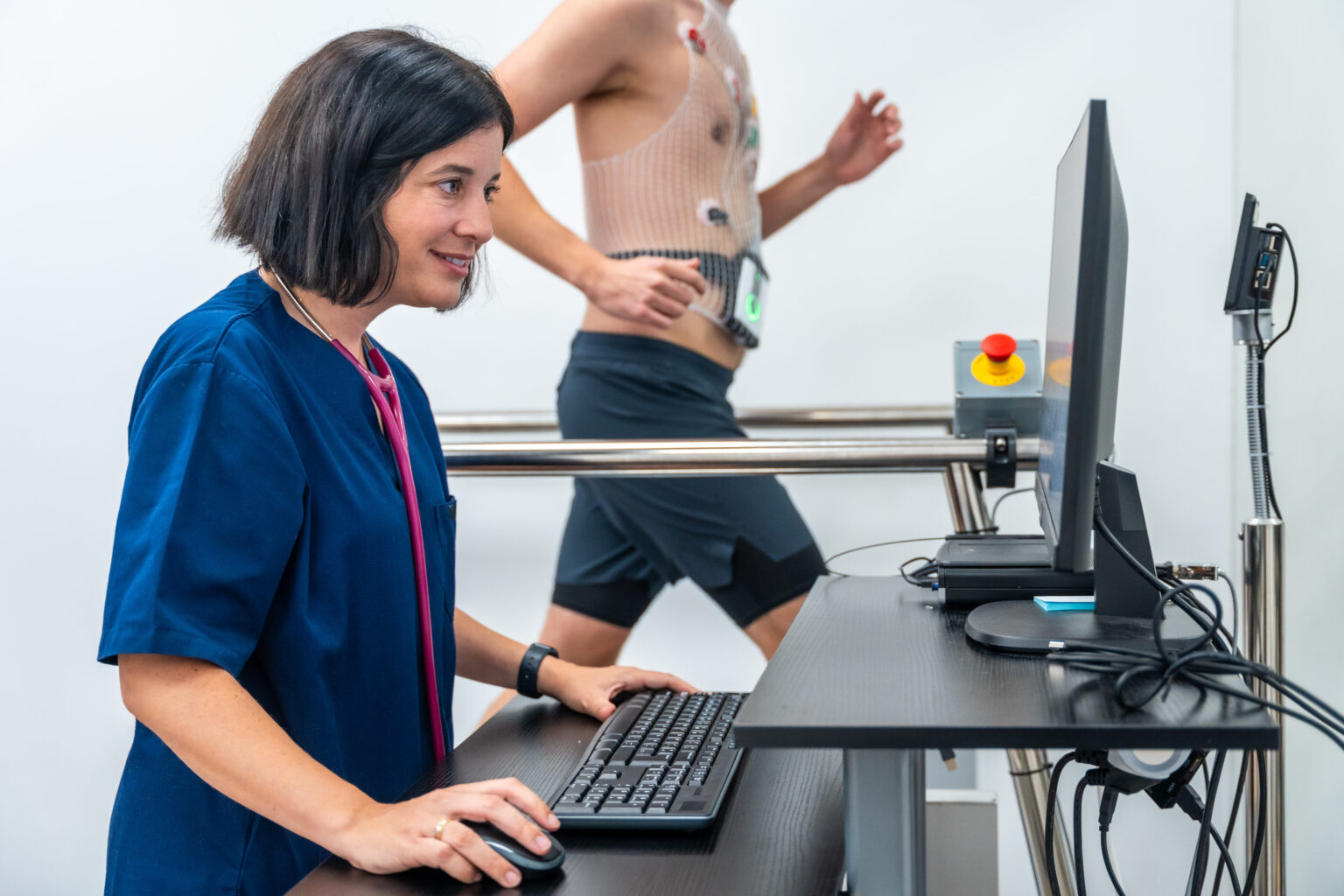
You’ll walk on a treadmill or use an exercise bike whilst your heart rate and blood pressure are monitored. This approach mimics natural physical stress and is suitable for most patients who can exercise.
Preparing for Stress Echocardiogram
Your preparation helps ensure accurate results and a smooth testing experience on the day of your procedure.
-
Medication review
Your cardiologist may ask you to stop certain heart medications 24-48 hours before the test, as they can affect the results.
-
Dietary considerations
Avoid caffeine for at least 12 hours before your appointment. Avoid heavy eating within 2-3 hours of the test.
What to Expect During Stress Echocardiogram
The stress echocardiogram follows a structured approach to monitor your heart’s response to increased workload.
Initial preparation and baseline measurements |
You’ll have small electrodes placed on your chest to monitor your heart rhythm throughout the test. Your blood pressure will be measured, and a baseline echocardiogram will be performed whilst you’re at rest. |
Stress phase beginning |
For exercise testing, you’ll begin walking slowly on a treadmill with the speed and incline gradually increasing every few minutes. If you’re having a medication test, the drug will be administered through a small tube in your arm whilst you remain lying down. |
Continuous monitoring during stress |
Your heart rate, blood pressure, and heart rhythm are monitored continuously throughout the stress portion. You’ll be asked to report any symptoms such as chest discomfort, breathlessness, or dizziness immediately. |
Peak stress imaging |
When your heart rate reaches the target level or you’ve achieved maximum exercise capacity, another echocardiogram is performed to capture images of your heart working at its hardest. |
Recovery and final assessment |
The exercise or medication will be stopped, and you’ll be monitored during a recovery period until your heart rate and blood pressure return towards normal levels. A final echocardiogram may be performed during this recovery phase. |
After Care and Recovery
Immediate Care
- Post-procedure monitoring: Your heart rate and blood pressure will be monitored for a short period after the test to ensure they return to normal levels. Most patients feel ready to leave within 15-30 minutes.
Recovery Timeline
- Same day recovery: Most patients resume normal activities immediately after leaving the clinic, though you may feel slightly tired if you exercised vigorously during the test.
Follow-up Care
- Results discussion: Your cardiologist will typically discuss the preliminary findings with you on the same day, with a detailed report and treatment recommendations following within a few days.
Are your symptoms affecting your quality of life?
Consult our MOH-accredited specialist for a comprehensive diagnosis & personalised treatment plan today.

Potential Risks and Complications
Stress echocardiograms are generally well-tolerated with a low risk of complications. Some patients may feel temporarily tired, breathless, or experience mild chest discomfort during or after the test, which usually resolves with rest.
A consultation with a qualified cardiologist in Singapore ensures the test is suitable for you and that any potential risks are carefully managed.
Frequently Asked Questions (FAQs)
Is Stress Echocardiogram painful or uncomfortable?
The test is not painful. You may feel tired or slightly breathless during the exercise, similar to walking briskly or climbing stairs. Any discomfort typically resolves once the Stress Echocardiogram is completed.
What if I can’t exercise due to joint or mobility issues?
If you are unable to use a treadmill or exercise bike, your cardiologist in Singapore can perform a medication-based Stress Echocardiogram to safely assess your heart function.
Can I eat or drink before the test?
Light meals are allowed, but avoid heavy food within 2-3 hours of your appointment. It’s important to avoid caffeine for at least 12 hours, as it can affect your test results.
When will I receive my Stress Echocardiogram results?
Your cardiologist will often share preliminary results immediately after the test. A detailed report and treatment recommendations are typically provided within a few days.


Dr. Kua Jieli
MBBS (SG)|MRCP (UK)|MMed (Internal Med) (SG)|FAMS (Cardiology, SG)
Dr. Kua is a senior consultant cardiologist specialised in interventional cardiology and is the medical director at Carrington Cardiology.
- He is experienced in managing complex coronary artery disease and a variety of other cardiovascular diseases and conditions.
- He also handles difficult coronary interventional procedures such as left main disease, chronic total occlusions, and calcified lesions.
- He served as a Senior Consultant at National University Hospital Singapore and Ng Teng Fong General Hospital and was also the Director of the Cardiovascular Catheterisation Laboratory.
Prior to this, he served as an International Cardiology Fellow and Honorary Consultant at Hammersmith Hospital Imperial Healthcare Trust, where he gained valuable experience in various prestigious healthcare institutions.


Mount Elizabeth Medical Centre
3 Mount Elizabeth, #12-02 Medical Centre
Singapore 228510


Mon to Fri: 09:00am – 05:00pm
Sat: 09:00am – 12:30pm
Sun & Public Holidays: Closed
Get In Touch With Us
Leave us a message and we’ll get back to you shortly
Mount Elizabeth Medical Centre
3 Mount Elizabeth, #12-02 Medical Centre
Singapore 228510
Mon to Fri: 09:00am – 05:00pm
Sat: 09:00am – 12:30pm
Sun & Public Holidays: Closed